

Are You Living Your Life or Escaping It?
If I count the time I have spent living from the moment I was born until now and remove all the hours I spent escaping from life, I honestly feel that I have lived only half of it. That realisation shocked me. It is hard to imagine how much time I have wasted simply trying to escape reality.
Escapism sounds like a harmless word. Most people do not think much about it. I used to think the same way. After all, what is wrong with escaping for an hour? We work hard every day. We deal with stress, responsibilities, and endless problems. Wanting a break from all of that seems completely normal.
The real problem begins when that one hour quietly turns into six hours. Sometimes it even becomes an entire day. You do not notice it happening because escapism feels comfortable. But when you finally return to reality, everything you were trying to avoid is still waiting for you. The mind then starts craving another escape, and before long, a habit begins to form.
Today, this is happening everywhere. Many people may not admit it, but they spend a large part of their lives escaping reality through mobile phones, movies, social media, games, or endless streams of content.
When my parents were in their twenties, they did not have unlimited entertainment available at their fingertips. The same was true for most of our ancestors. Human beings evolved in a world with far fewer distractions. Yet the mind we use today is largely the same mind that existed thousands of years ago.
Technology has changed rapidly, but the human brain has not.
I realised this when I started journaling and tracking how I spent my time. What I discovered surprised me. Many activities that I called relaxation were actually forms of escape. I was spending countless hours avoiding reality when I could have used that time to learn, create, improve my life, or help other people.
As you read this article, ask yourself one simple question:
How much of your life are you truly living, and how much of it are you spending trying to escape?
The Silent Escape We Don’t Notice

You know the most obvious problem with escapism is that it stays hidden. It is very difficult to notice when we are actually escaping reality. Most of the time, we think we are simply relaxing or taking a break. To recognise escapism, we need a very attentive mind because the line between relaxation and escape is often hard to see.
When I used to work for clients, I always worked in shifts. I would work for a few hours and then take a break to relax my mind. During those breaks, I usually played games. In the beginning, everything was normal. I worked, relaxed for a while, and then returned to work.
When Relaxation Turns Into Escape
Slowly, things started changing. The time I spent working decreased, while the time I spent playing games increased. At first, I did not notice it. Then deadlines started getting delayed. I kept telling myself that I would start tomorrow, but that tomorrow never came. Eventually, I lost a project because of it.
The strange part is that I never realised what was happening. What started as relaxation had quietly turned into an escape from reality.
Until you lose something important, you rarely realise that you are escaping. You convince yourself that everything is normal. You tell yourself that you are simply relaxing because the mind needs breaks. And that is true. The mind does need breaks. The problem begins when relaxation slowly turns into avoidance.
The World Makes Escaping Easy
In today’s world, almost everything is trying to capture your attention. Social media, games, movies, and endless content constantly pull you away from your current reality and place you inside another one.
Inside that reality, everything feels easier. You feel entertained, distracted, and comfortable. But the moment that distraction ends, reality returns. If your real life feels difficult, your mind naturally wants to escape again. This cycle repeats itself over and over, and most people never notice it happening.
The First Step Is Awareness
The first step to overcoming escapism is recognising that it exists. You cannot solve a problem that you do not know you have.
One thing that helped me was tracking my time. I started writing down what I did throughout the day. At the end of the day, I reviewed everything. The results surprised me. I discovered how much time I was spending escaping instead of intentionally living.
If you try the same exercise, you may be surprised by what you discover about your own life.
Why Reality Feels So Heavy

We have understood that in one way or another, many of us are escaping reality. But that raises an important question: why are we escaping in the first place? What is so difficult about reality that we feel the need to depend on something else just to get away from it for a while?
This is a question you should ask yourself.
Why are you escaping from your normal life?
For me, the answer is simple. Life often feels heavy. Everywhere I go, there seems to be some kind of conflict waiting for me. At work, there is pressure, deadlines, and expectations. At home, there can be family problems, responsibilities, and worries about the future. Even things like poor habits, unhealthy food, and a stressful environment can create health problems over time.
No matter where I look, there always seems to be something that demands my attention or drains my energy. To avoid dealing with all of it, I escape.
Escapism Is Often About Forgetting
The more I thought about it, the more I realised that escapism is often about forgetting. We do not escape because we love fantasy worlds. We escape because we want to forget our current reality, even if it is only for a few moments.
When I escape into games, movies, or endless scrolling, I am not really searching for entertainment. I am searching for distance from my problems. For a short period of time, I forget my worries, my responsibilities, and even myself. That temporary relief is what makes escapism so attractive.
I think many people experience the same thing.
In today’s world, escaping reality has become easier than ever. Modern life moves at an incredible pace. Everyone seems to be chasing something. People chase success, money, status, recognition, and endless goals. It often feels like nobody is waiting for anyone. Everyone is trying to climb their own ladder as quickly as possible.
The problem is that human beings were never designed for this kind of environment. Technology has changed rapidly, but our minds have not evolved at the same speed. We are constantly surrounded by information, expectations, and distractions, yet we still carry the same human needs for connection, rest, meaning, and belonging.
We want genuine relationships. Many people also crave deeper conversations instead of surface-level interactions. Above all, humans want to feel understood. But many feel that these things are becoming harder to find.
Perhaps that is one of the reasons reality feels so heavy. And when reality feels heavy, escape becomes tempting.
When Escape Becomes Avoidance

You know what escapism does to our minds? It slowly hijacks them. At first, it feels harmless. You think you are simply taking a break or relaxing for a while. But over time, something starts changing. You begin losing the desire to do difficult things and start running away from your problems instead of facing them.
One of the first signs of this is procrastination. Tasks that should take a few minutes get pushed to tomorrow. Important work starts piling up. Responsibilities begin slipping out of your control. Instead of dealing with uncomfortable situations, you escape from them. You avoid painful emotions, difficult conversations, and challenging tasks. Slowly, this habit starts making the mind dull and less capable of handling reality.
The biggest damage escapism can cause, at least in my experience, is that it pushes you into a world of imagination. In that world, everything feels perfect. There are no deadlines, no failures, no responsibilities, and no difficult emotions. The longer you stay there, the harder it becomes to return to reality because reality is not perfect. Real life is messy, uncertain, and often uncomfortable.
Eventually, you start avoiding anything that stands between you and your escape. Whether it is work, relationships, responsibilities, or personal growth, everything begins to feel like an obstacle. At that point, escapism is no longer helping you relax. It is preventing you from living.
That is why escapism can be so dangerous. Most people think it only wastes a few hours, but if left unchecked, it can slowly take away days, months, or even years of your life. By the time you realize what has happened, you may find that you have spent more time escaping your life than actually living it.
Healthy Escapism vs Unhealthy Escapism
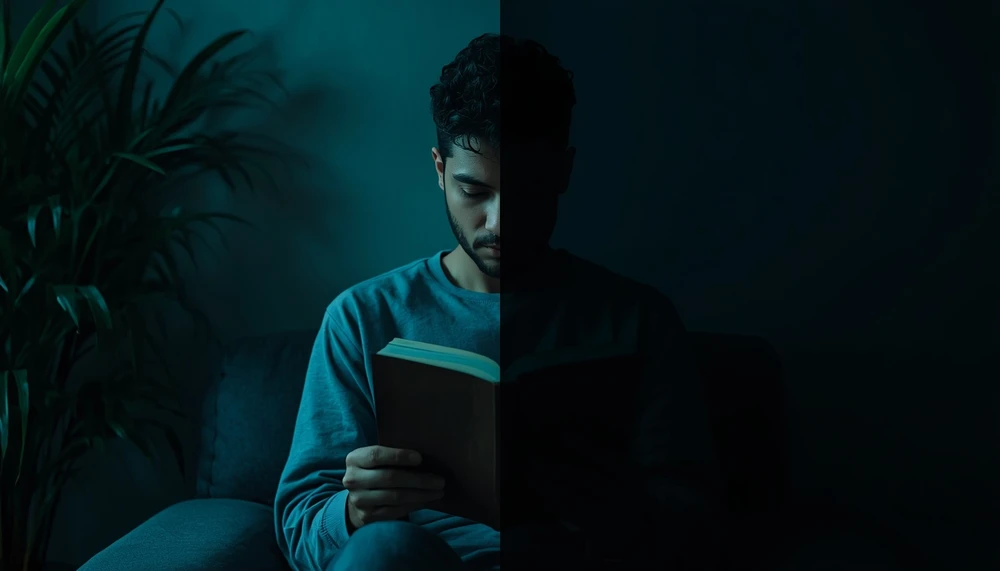
Throughout this article, I have talked a lot about the negative side of escapism. However, it is important to understand that escapism itself is not always a bad thing. In fact, many of the activities we use to relax after a long day can be considered healthy forms of escapism. Taking a break from reality for a short period is completely normal and sometimes even necessary.
Escapism becomes a problem when it starts controlling your life instead of helping you recover from it. Personally, I enjoy reading books, and I often use reading as a way to escape from my daily routine. But unlike mindless distractions, reading usually teaches me something new, exposes me to different perspectives, and leaves me feeling better than before. Because of that, I consider it a healthy form of escapism. It allows me to step away from reality for a while without disconnecting from my growth as a person.
I think this is the difference between healthy and unhealthy escapism. Healthy escapism helps you return to your life with more energy, knowledge, or clarity. Unhealthy escapism makes you avoid your life altogether. Activities like endless doomscrolling, binge-watching for hours, or spending entire days escaping into games often leave people feeling worse than before.
The challenge is to find forms of escapism that refresh your mind without taking control of it. What those activities are may be different for every person, and discovering them is something only you can do through self-awareness and honest reflection.
How to Return to Your Real Life

Let me tell you my own story.
There was a time when my daily life was filled with all kinds of escapism. Some of those escapes became addictive as well. If I compare myself today to who I was back then, the amount of escapism in my life has decreased significantly. I still have some forms of escapism, but they are nowhere near what they used to be.
The first step was realizing and accepting that I was escaping. That sounds simple, but it was actually one of the hardest parts for me. Accepting uncomfortable truths has never been easy. I only started noticing my patterns when I began journaling and writing down how I spent my time. As I looked through my days, I realized that I was escaping far more often than I had imagined.
Once I recognized the problem, I started asking myself a more important question: Why am I escaping? We usually escape because there is something we do not want to face. There is some discomfort, fear, responsibility, or emotion that we are trying to avoid. To find my answer, I started spending time alone every day without distractions. I would sit with my thoughts and honestly ask myself what I was running away from.
Slowly, the answers started appearing.
After that, I stopped trying to change everything at once. Instead, I focused on taking small steps toward the things I was avoiding. For example, if I was avoiding writing a blog, I would not force myself to finish the entire article in one day. I would simply write one heading or one paragraph. That small action made the task feel less overwhelming. Over time, one paragraph became two, two became three, and eventually I could finish an entire article without feeling the need to avoid it.
I repeated the same process with many other areas of my life. The more I faced what I was avoiding, the less I felt the need to escape from it.
The most important thing I learned is that this is a gradual process. It does not happen overnight. It took me a long time to build these habits, and there were many setbacks along the way. But once I started spending more time in reality instead of running from it, something unexpected happened. Reality itself became easier to live with.
And when you spend enough time facing your life, you slowly begin to appreciate it instead of escaping from it.
The Question Only You Can Answer
By now, you probably understand how I personally dealt with escapism. But I do not want to end this article by giving you a list of generic tips. The truth is that the only real way to overcome escapism is to ask yourself the right questions.
Believe me, when you start asking honest questions, the answers slowly begin to appear on their own.
One thing I have noticed is that many people spend their entire lives searching for solutions in other people’s stories. They watch videos, read books, and follow advice hoping that someone else has the perfect answer to their problems. There is nothing wrong with learning from others, but the mistake is believing that another person’s solution will automatically work for you.
We are all different.
Your experiences are different. So are your struggles and personal challenges. Your fears, desires, and circumstances are unique as well. Nobody else has lived your life, which means nobody else can give you a perfect blueprint for solving your problems.
That is why I believe self-reflection is far more powerful than blindly following advice. When you start questioning your own behavior, your habits, and your choices, you begin understanding yourself on a deeper level. And once you understand yourself, solving your problems becomes much easier.
There is one more thing worth remembering. Nothing in this world is completely good or completely bad, not even escapism. The real question is not whether escapism exists in your life. The real question is why you are using it.
Are you escaping for a short while to rest, recover, and return with more energy?
Or are you escaping because there is something in your life that you do not want to face?
The answer to that question changes everything.





One Comment